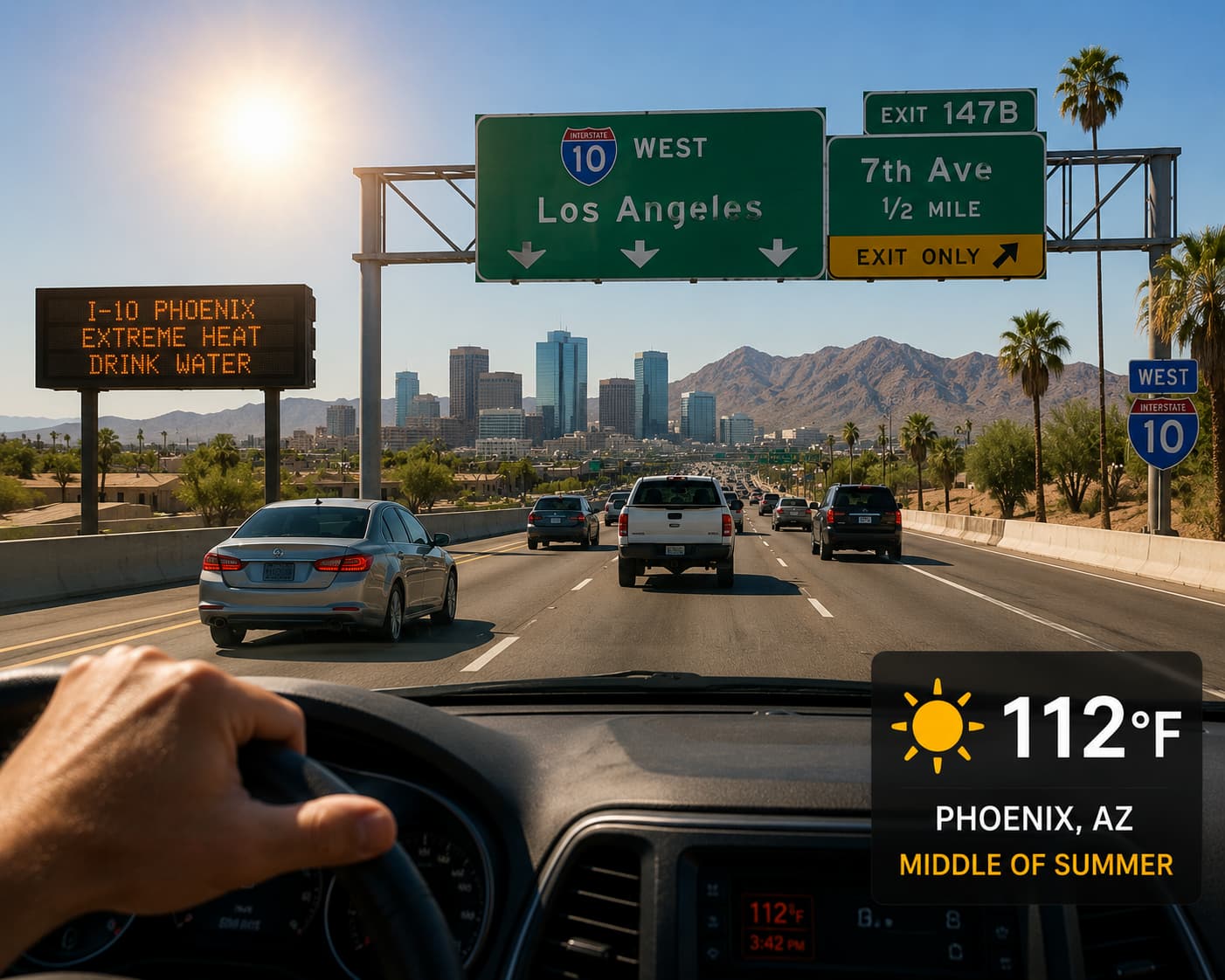
For a lot of Valley commuters, a long drive means nothing, it’s just a normal day. Between Loop 101, Loop 303, I-10 and US-60 plenty of Phoenix-area drivers spend an hour or more in the car every single day, often at sustained highway speeds through some of the hottest pavement in the country. That kind of daily grind puts real cumulative wear on a transmission, wear that’s easy to ignore because it happens so gradually.
At Pro-Tech Transmissions we see the results of long commutes more than almost anything else. Transmissions that were never abused, never towed anything, never saw a single off-road mile but wore out faster than they should have simply because of how many hours they spent working the same stretch of hot asphalt day after day. Here’s what long commutes actually do to a transmission and what Southwest Valley drivers can do about it.
Why daily freeway driving is harder than people think
A transmission under sustained highway load works differently than one used for short trips around town. On the freeway it holds a single gear for extended periods and runs at higher RPMs for longer stretches generates more continuous heat than stop-and-go driving typically produces. Add in Arizona’s summer temperatures where pavement surface heat routinely exceeds 140°F and the fluid inside your transmission is working against conditions most manufacturers didn’t originally engineer for.
This is the answer we give most often when customers ask why a long commute wears out a transmission faster. It’s not one dramatic event, it’s thousands of hours of sustained heat and load slowly breaking down fluid and accelerating wear on internal components that would otherwise last much longer under lighter use.
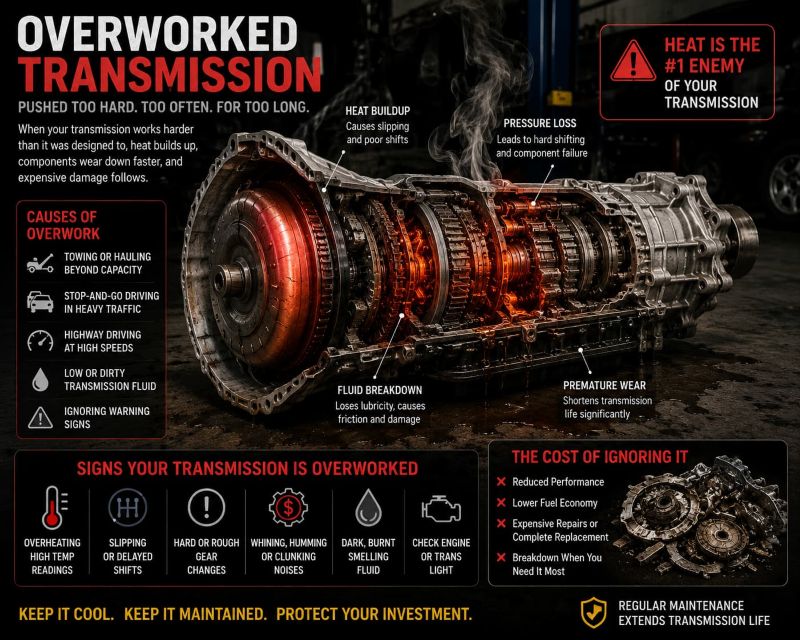
Signs your commute is catching up with your transmission
Commuters are often the last to notice transmission wear simply because the same drive every day makes gradual changes easy to normalize.
Watch for:
- A shift that used to be smooth is now feeling slightly delayed or hesitant, especially getting onto the freeway from a stop.
- A shudder or vibration around 45-65 mph right in the range most Valley freeways are posted for.
- Slipping on Loop 101 or I-10 on-ramps where the transmission has to work hardest to get up to merge speed.
- A burning smell after a longer-than-usual stretch of highway driving particularly in summer.
- Fluid that’s turned brown or smells scorched at your next oil change even if you haven’t noticed anything while driving.
None of these mean a transmission is about to fail tomorrow. They mean it’s telling you something and a free diagnostic catches it a lot cheaper than waiting for it to get worse.
How often should commuters check their transmission fluid?
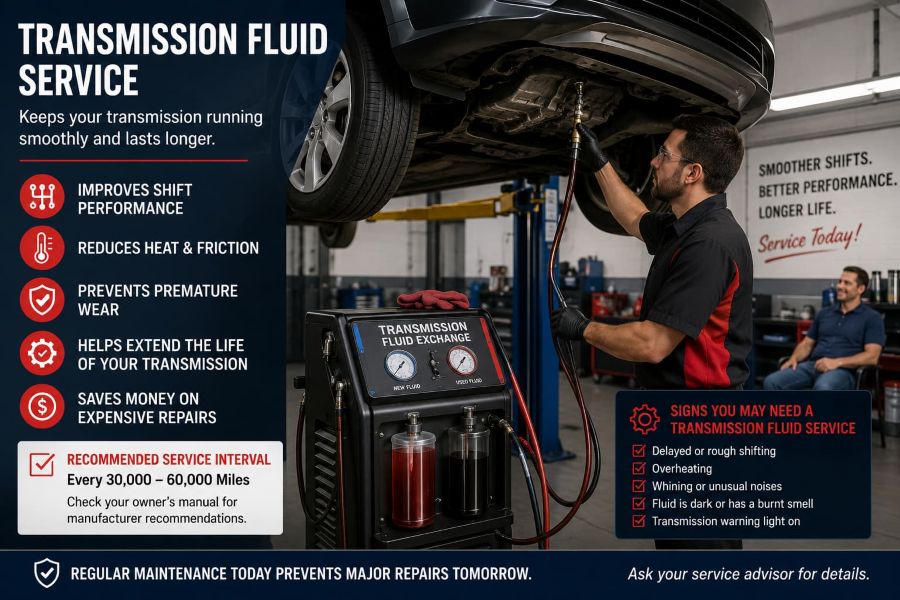
This is one of the most common questions we get from Southwest Valley drivers with long routes. Most manufacturers recommend a transmission fluid service somewhere between 30,000 and 60,000 miles under normal conditions but normal conditions typically assume a mix of city and highway driving. Not hours of sustained freeway heat every single day. Drivers doing serious daily mileage on Phoenix-area freeways should treat the shorter end of that range as the target, not the longer one. Fluid conditions should be checked at every oil change rather than waiting for a scheduled milestone.
Protecting your transmission on a long commute
A few habits make a real difference for anyone spending significant time on Valley freeways:
- Don’t ignore early symptoms, a slight hesitation or shudder that shows up consistently on the same stretch of your commute that’s worth a diagnostic not a shrug.
- Stay on top of fluid service especially in summer. Heat is the single biggest factor accelerating wear for commuters; it’s also the easiest one to manage with regular maintenance.
- Give your vehicle a break on the hottest days when you can. Avoiding unnecessary idling in extreme heat giving the transmission a few minutes to cool down after a long highway stretch before immediately restarting a short trip reduces cumulative thermal stress over time.
- Get a professional opinion before small issues become expensive ones. A transmission that’s slipping occasionally on your Loop 101 on-ramp today can turn into a full rebuild in a matter of months if the underlying cause isn’t addressed.
Why this matters more if you commute through the Southwest Valley
Drivers commuting through Glendale, Peoria, Avondale, Goodyear, and the surrounding Southwest Valley are often covering some of the longest hottest stretches of highway in the metro area. Long straightaways with fewer shaded rest points and extended exposure to direct summer sun. That combination of distance and heat is exactly the profile that wears transmissions down fastest which is why regular checks matter more here than they would for a shorter, cooler commute elsewhere.
When to get it checked
If any of the symptoms above sound familiar or if it’s simply been a while since your transmission fluid was last checked Pro-Tech Transmissions offers a free external computer diagnostic. No guesswork, no pressure, just a clear answer on what your daily commute has actually done to your transmission and what if anything needs attention.