Your vehicle’s automatic transmission performs thousands of shifts without requiring much thought from you. However, when something begins to go wrong, those smooth, nearly invisible gear changes can quickly turn into slipping, hesitation, strange noises, or a vehicle that will not move at all.
Automatic transmission problems rarely correct themselves. In many cases, continuing to drive can turn a repairable issue into extensive internal damage requiring a rebuild or replacement.
At Pro-Tech Transmissions in Glendale, we help drivers identify transmission problems, understand their repair options, and make informed decisions about their vehicles. If your car, truck, or SUV is no longer shifting normally, recognizing the early warning signs could help you avoid more expensive damage.
What Does an Automatic Transmission Do?
An automatic transmission transfers power from the engine to the wheels while automatically selecting the appropriate gear for the vehicle’s speed and driving conditions. It contains numerous mechanical, hydraulic, and electronic components that must work together precisely.
Transmission fluid is an essential part of this process. It lubricates moving components, creates hydraulic pressure, helps control gear changes, and carries heat away from the transmission.
When the fluid becomes contaminated, overheated, or too low, the transmission may no longer operate correctly. Problems can also develop in the transmission’s clutches, seals, solenoids, sensors, torque converter, valve body, or other internal components.
Because several issues can produce similar symptoms, a professional diagnosis is the best way to determine what is actually happening.
Common Signs Your Automatic Transmission Needs Attention
A transmission does not always stop working without warning. It will often provide clues that something is wrong. Pay attention to changes in the way your vehicle shifts, accelerates, sounds, or feels.
Delayed Engagement
When you shift from park into drive or reverse, the vehicle should respond promptly. A noticeable delay before the gear engages can indicate low fluid, worn internal components, a hydraulic pressure problem, or another transmission issue.
A slight hesitation might not seem serious at first. However, if the delay is becoming longer or occurs more frequently, have the vehicle inspected.
Transmission Slipping
A slipping transmission may unexpectedly change gears, struggle to remain in gear, or allow the engine RPM to increase without a corresponding increase in vehicle speed.
You may press the accelerator and hear the engine revving, but the vehicle does not accelerate normally. Slipping can create excessive heat and friction inside the transmission, so it should never be ignored.
Hard or Rough Shifting
Automatic gear changes should generally feel smooth. A vehicle that suddenly jerks, clunks, shudders, or shifts forcefully may have a fluid, electrical, hydraulic, or internal mechanical problem.
Occasional rough shifting may be related to certain driving conditions, but repeated or worsening symptoms warrant a diagnostic inspection.
Unusual Noises
Whining, humming, grinding, buzzing, and clunking noises can all be associated with transmission trouble. The sound may only occur during acceleration, while shifting, when the vehicle is in neutral, or when selecting drive or reverse.
Different components can produce similar sounds. Having the noise professionally evaluated can help determine whether it is coming from the transmission or another part of the vehicle.
Transmission Fluid Leaks
Automatic transmission fluid is commonly red or reddish-brown, although its appearance changes as it ages. If you notice fluid collecting beneath your vehicle, schedule an inspection.
A transmission is a sealed system and should not normally lose fluid. A leak can lower the fluid level, reduce lubrication, disrupt hydraulic pressure, and cause the transmission to overheat.
Adding fluid without repairing the source of the leak is not a long-term solution. Using the wrong type of transmission fluid can also create additional problems.
A Burning Smell
A burning smell may indicate that transmission fluid is overheating or breaking down. Overheated fluid cannot protect internal components as effectively and may develop a dark color or burnt odor.
If you notice a burning smell while driving, particularly when it is accompanied by shifting problems, safely pull over and arrange for the vehicle to be inspected.
Shaking or Shuddering
Shaking, vibration, or shuddering during acceleration can have several causes, including transmission or torque converter problems. The sensation may occur at a specific speed or during a particular gear change.
Even if the vehicle continues to drive, repeated shuddering should not be considered normal.
Dashboard Warning Lights
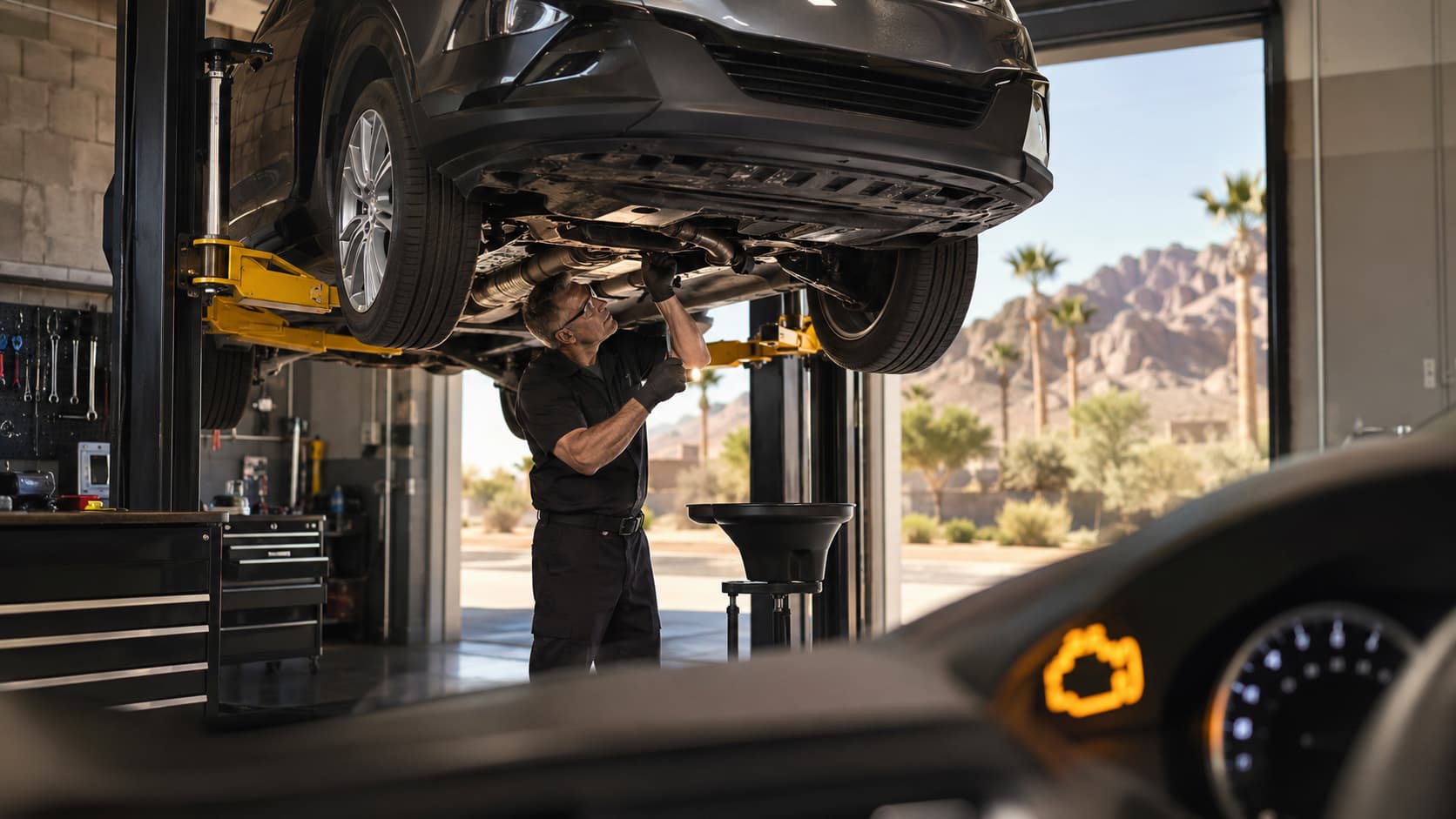
A check-engine light does not always mean the engine itself is failing. Modern vehicles use computers and sensors to monitor transmission performance, and a transmission-related fault can activate the check-engine light or a separate transmission warning.
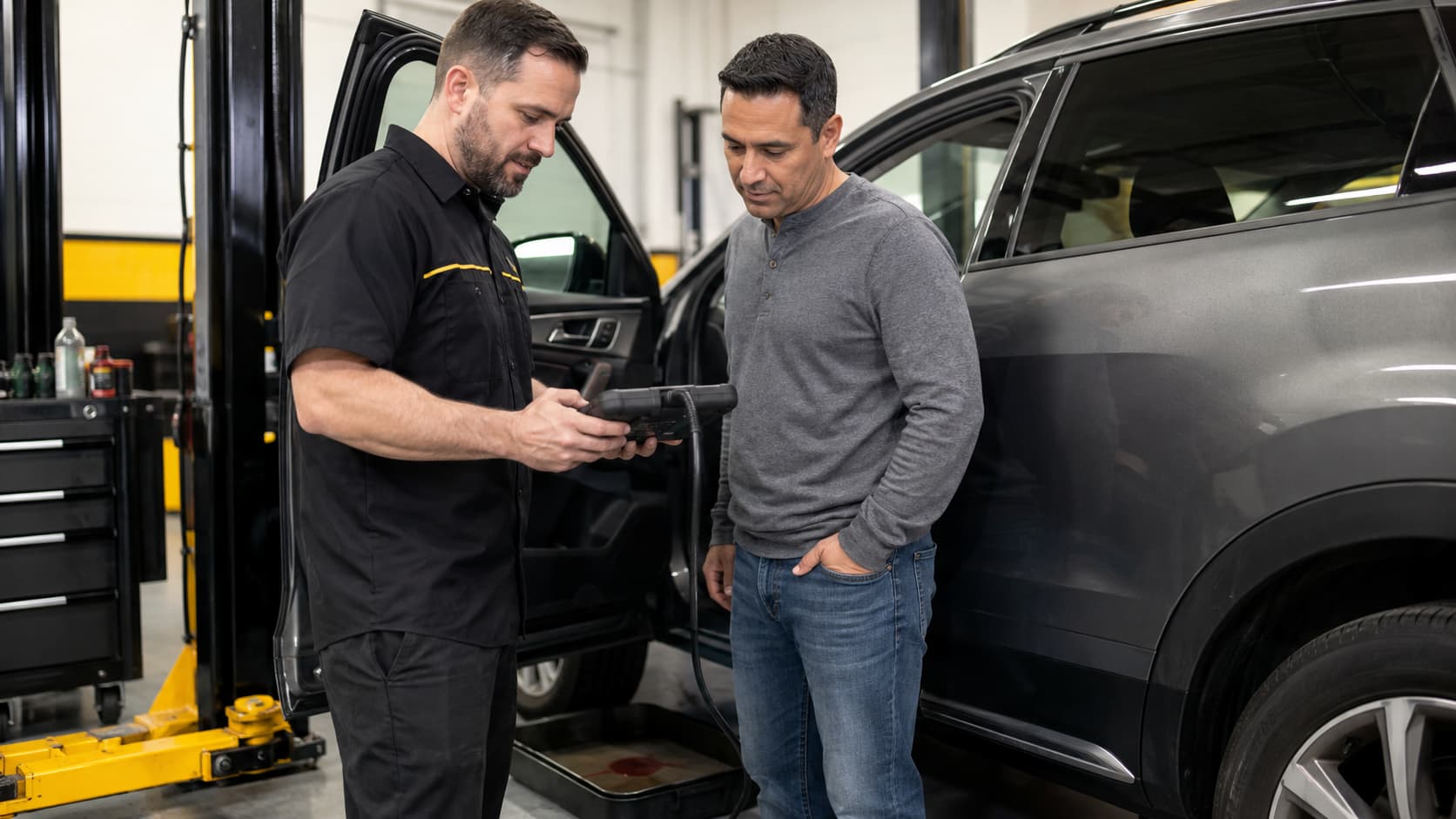
A diagnostic scan can identify stored trouble codes, but a code is only the beginning of the diagnosis. A technician must still determine what caused the code to appear.
The Vehicle Will Not Move
If the engine runs but the vehicle will not move in drive or reverse, the transmission may have a serious problem. Do not continue revving the engine in an attempt to force the vehicle to move.
Arrange for towing to prevent additional damage and avoid becoming stranded in an unsafe location.

How Phoenix Heat Affects Automatic Transmissions
Summer driving in Phoenix and Glendale exposes vehicles to some of the most demanding temperatures in the country. Automatic transmissions already create heat during normal operation. High outdoor temperatures can make it more difficult for the transmission and cooling system to control that heat.
Several local driving conditions can increase the strain:
- Extreme summer temperatures
- Stop-and-go traffic
- Long daily commutes
- Towing trailers or carrying heavy loads
- Driving up steep grades
- Insufficient or deteriorated transmission fluid
- Existing cooling-system problems
Transmission fluid helps reduce friction and remove heat from internal components. As fluid ages and is repeatedly exposed to elevated temperatures, it can lose some of its protective qualities. Over time, heat can also accelerate wear on seals, gaskets, clutches, and other components.
Arizona heat does not automatically cause every transmission failure. However, it can make an existing fluid leak, cooling issue, or worn component more serious. A transmission that operates normally during cooler months may begin slipping, shifting roughly, or overheating when summer temperatures rise.
Following the maintenance schedule recommended for your specific vehicle is especially important in Arizona. Service needs vary by manufacturer, transmission design, mileage, usage, and driving conditions, so there is no single fluid-service interval that applies to every vehicle.
Does Your Transmission Need Repair or Replacement?
Hearing the words “transmission problem” does not necessarily mean you need a completely new transmission. Some issues can be corrected without rebuilding or replacing the entire unit.
The appropriate solution depends on the cause of the problem and the amount of damage already present.
Transmission Service or Minor Repair
A smaller problem may involve a fluid leak, sensor, electrical connection, solenoid, seal, or another serviceable component. When identified early, these problems may be resolved before they cause extensive internal damage.
However, changing the fluid alone will not repair worn or broken internal components. The transmission must be properly diagnosed before recommending a service or repair.
Transmission Repair
A transmission repair addresses specific failed components without necessarily rebuilding the entire transmission. Whether this is possible depends on the transmission design, the location of the damage, parts availability, and the condition of the remaining components.
Transmission Rebuild
Rebuilding involves removing and disassembling the transmission, inspecting its internal parts, and replacing damaged or worn components. The transmission is then reassembled, installed, and tested.
A rebuild can be a practical option when the transmission has significant internal wear but can still be restored to dependable operation.
Transmission Replacement
Replacement may be recommended when the existing transmission is severely damaged, cannot be repaired economically, or when replacement provides a more reliable long-term option.
The best choice depends on several factors:
- The diagnosis
- The extent of the damage
- Vehicle age and mileage
- Overall vehicle condition
- Availability of parts or replacement units
- Repair cost compared with vehicle value
- How long you intend to keep the vehicle
At Pro-Tech Transmissions, our goal is to explain what we find and help you understand the available options. We do not believe drivers should be expected to make an expensive decision without knowing what is wrong with their vehicle.
What Should You Do If Your Transmission Is Giving You Trouble?
If your transmission begins slipping, shifting roughly, leaking, or making unusual noises, take the following steps.
Do Not Ignore the Symptoms
Transmission problems frequently become more expensive when a vehicle continues to be driven. A leak or pressure problem may begin as a manageable repair but eventually damage additional internal components.
Scheduling a diagnosis early gives you the best opportunity to address the problem before it becomes more serious.
Avoid Driving If the Vehicle Is Unsafe
Stop driving if the vehicle:
- Will not stay in gear
- Struggles to move
- Is leaking heavily
- Produces a strong burning smell
- Overheats
- Shifts violently
- Makes loud grinding or clunking noises
Driving under these conditions could increase the damage or leave you stranded.
Do Not Add Just Any Transmission Fluid
Automatic transmissions require specific fluid formulations. Using an incompatible fluid can negatively affect shifting and internal operation.
Fluid levels on many newer vehicles also require a particular temperature and checking procedure. If you are unsure, allow a qualified technician to inspect the system.
Make Note of the Symptoms
Try to remember when the issue occurs. Helpful details include:
- Whether the vehicle is hot or cold
- The speed at which the problem appears
- Whether it happens during acceleration
- Which gear appears to be affected
- Whether a warning light is illuminated
- Whether you recently noticed a fluid leak
- Whether the vehicle has been towing or carrying a heavy load
These details can help the technician reproduce the problem and complete a more accurate diagnosis.
Schedule a Professional Diagnostic Inspection
Many transmission symptoms overlap with engine, electrical, drivetrain, or computer-control problems. Replacing parts based only on a dashboard code or internet search can become expensive without resolving the actual issue.
A professional diagnostic inspection helps identify the cause before repairs are recommended.
Why Waiting Can Cost You More
A transmission contains many components that depend on proper lubrication, pressure, and temperature control. When one part of the system begins failing, it can place additional strain on other parts.
For example, a fluid leak may lower the transmission fluid level. Low fluid can reduce hydraulic pressure and lubrication. The transmission may then begin slipping and overheating, creating wear that did not exist when the leak first developed.
The sooner the problem is identified, the more repair options you may have. Waiting until the vehicle will no longer move can limit those options and increase the final cost.
Get an Automatic Transmission Diagnosis in Glendale, Arizona
If your automatic transmission is slipping, leaking, shifting roughly, or making unusual noises, let Pro-Tech Transmissions determine what is causing the problem.
Our Glendale transmission shop uses professional diagnostic equipment to evaluate transmission issues and recommend the most practical repair, rebuild, or replacement option. We service cars, trucks, and SUVs and work to help every customer understand what their vehicle needs before moving forward.
Pro-Tech Transmissions offers a free diagnostic, and free towing up to a $100 value is available with a major auto repair. Financing options are also available for qualified customers.
Visit us at:
Pro-Tech Transmissions
5408 W. Camelback Road #2
Glendale, AZ 85301
Phone: (623) 600-8661
Our Glendale shop is open Monday through Friday from 8:00 a.m. to 5:00 p.m. and Saturday from 8:00 a.m. to noon.
Do not wait for a transmission warning sign to become a complete breakdown. Contact Pro-Tech Transmissions today and let our experienced team help you get back on the road.
Frequently Asked Questions About Automatic Transmissions
Can extreme Phoenix heat damage an automatic transmission?
Extreme heat can place additional strain on a transmission and its cooling system. High temperatures may accelerate fluid deterioration and worsen existing leaks, cooling problems, or internal wear. Proper maintenance and early diagnosis are especially important for vehicles driven through Phoenix summers.
Does slipping mean my transmission needs to be replaced?
Not always. Slipping can be caused by low fluid, a leak, a control problem, worn components, or more extensive internal damage. A professional diagnosis is necessary to determine whether the transmission can be repaired or requires rebuilding or replacement.
Can I continue driving with a transmission fluid leak?
Continuing to drive with a leak can allow the fluid level to drop, resulting in poor lubrication, reduced pressure, overheating, and internal damage. Have the leak inspected as soon as possible. If the vehicle is shifting poorly or leaking heavily, it may be safer to have it towed.
Why does my vehicle hesitate before moving into drive?
Delayed engagement can be related to low or deteriorated fluid, hydraulic pressure loss, worn seals, valve-body problems, or internal transmission wear. Since several issues can cause the same symptom, the vehicle should be diagnosed before repairs are recommended.
Is repairing a transmission better than replacing it?
The best option depends on the type of failure, extent of the damage, vehicle condition, mileage, parts availability, and cost. A limited repair may be appropriate for an isolated problem, while extensive internal damage may make rebuilding or replacement the more reliable choice.
What should I do if my transmission warning light comes on?
Avoid heavy acceleration, towing, or unnecessary driving until the vehicle can be evaluated. If the transmission is slipping, overheating, shifting violently, or producing a burning smell, stop driving and arrange for towing. A diagnostic scan and physical inspection can help identify the cause of the warning.