Between Lake Pleasant, Saguaro Lake, the Colorado River, and weekend escapes to the high country, towing a boat, camper, or utility trailer is a normal part of life in the Valley. It is also one of the hardest jobs you can ask of an automatic transmission.
At Pro-Tech Transmissions in Glendale, we see the results every year: vehicles that handled the trip out just fine, then started slipping, shuddering, or overheating on the way home. The good news is that most towing-related transmission damage is preventable. Here is what Valley drivers should know before hitching up.
Why Towing Is So Hard on a Transmission in Arizona
Your transmission transfers engine power to the wheels. When you add thousands of pounds behind the vehicle, it has to work harder to get that weight moving and keep it moving, and that extra work creates heat. Heat is the leading cause of transmission wear. It breaks down transmission fluid, hardens seals, and wears the clutch material inside an automatic transmission.
Arizona adds to the problem. High ambient temperatures leave less margin before the transmission runs hot, and common Valley driving conditions stack on more stress: stop-and-go traffic on the Loop 101 and I-10, long highway grades leaving the Valley, and crowded boat ramps in July. A trailer that is slightly too heavy, or a transmission cooler that is missing or undersized, can turn a normal trip into an expensive repair.
Know Your Numbers Before You Hitch Up
Most towing problems start before the trailer is even connected. Check these four things first:
- Maximum towing capacity. Find it in your owner’s manual or on the tow-rating label for your exact vehicle and drivetrain. Many manufacturers rate trucks using the SAE J2807 standard. Do not rely on the hitch rating alone, because the hitch is often rated higher than the vehicle itself.
- Gross combined weight rating (GCWR). This is the maximum allowed weight of your vehicle, trailer, passengers, and cargo combined.
- Tongue weight. For most conventional trailers, tongue weight should be roughly 10 to 15 percent of the trailer’s loaded weight. Too light and the trailer can sway; too heavy and it overloads the rear of the vehicle.
- Loaded weight, not empty weight. A boat with fuel, gear, and a cooler or a camper with full water tanks weighs far more than the number in the brochure. When in doubt, weigh it at a public scale.
A note on CVTs and smaller SUVs. Some vehicles with continuously variable transmissions have low towing ratings, and some are not rated to tow at all. Always follow the manufacturer’s stated limit, and be extra conservative on heat and hills.
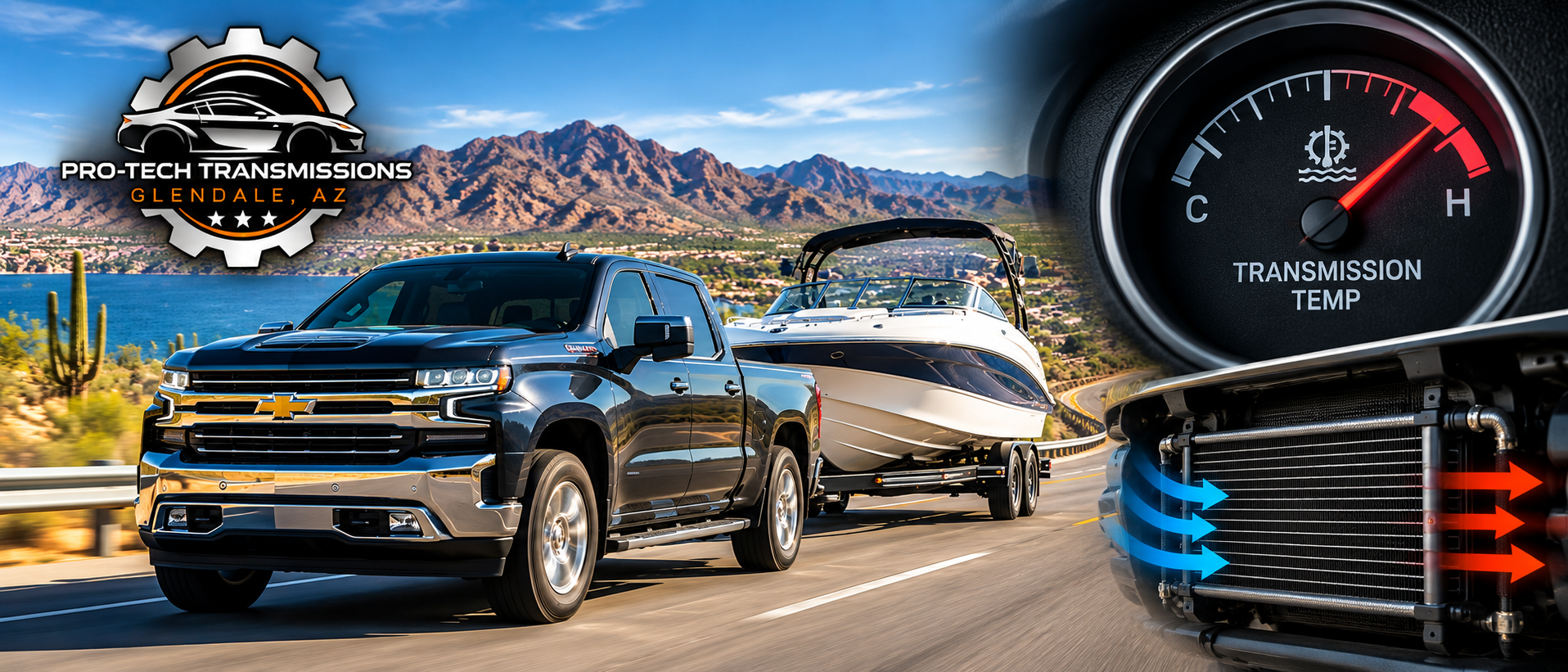
How to Tow Without Overheating Your Transmission
- Use tow/haul mode if your vehicle has it. It changes shift patterns to hold gears longer and reduce constant gear hunting under load.
- Confirm your vehicle has transmission cooling. Many factory tow packages include an auxiliary transmission cooler. If yours does not and you tow regularly, ask a shop whether an aftermarket cooler makes sense for your vehicle.
- Choose a lower gear on grades. If the transmission keeps shifting back and forth on a climb, manually select a lower gear and let it hold steady.
- Slow down uphill. It is better to let your speed drop than to force the vehicle to hold highway speed up a long grade.
- Avoid the hottest hours. In summer, an early-morning departure is easier on your transmission than a 3 p.m. pull in 110-degree heat.
- Keep the trailer brakes working. A trailer that pushes the vehicle on downhill stops adds stress to the brakes and drivetrain. Make sure the brake controller is properly adjusted.
- Come to a complete stop before changing between Drive and Reverse. At the boat ramp, rolling shifts and rocking back and forth are hard on internal clutches.
- Set the parking brake before shifting into Park on a slope. Let the brake, not the transmission’s parking mechanism, hold the weight of the vehicle and trailer.
Valley Towing Routes That Put Extra Strain on Your Transmission
Not every trip is equally demanding. These common Valley routes are where we most often see towing strain show up:
- Interstate 17 north toward Flagstaff. A long, sustained climb out of the Valley with a loaded trailer is one of the toughest tests for any transmission.
- Highway 87 (the Beeline) toward Payson and Saguaro Lake. Steady grades and weekend traffic add up.
- Loop 303 and State Route 74 to Lake Pleasant. Short trip, but busy weekend traffic and steep ramp approaches are hard on a transmission already warmed up from the drive.
- I-10 and US-60 toward the Colorado River lakes. Long, hot desert stretches with little relief, especially in summer.
Warning Signs Your Transmission Is Struggling With the Load
Pay attention to your vehicle while towing and right after you unhitch. Warning signs include:
- Slipping, or engine revs rising without matching acceleration
- Delayed or harsh shifts
- Shuddering or vibration under load
- A burning smell
- A transmission or temperature warning light
- Red or brown fluid under the vehicle
What to Do If You Notice a Problem While Towing
Pull over when it is safe, shift into Park, and let the vehicle cool. Keep driving on a struggling transmission and a repair that might have been minor can become a rebuild. Look for leaks, and if the vehicle does not feel right when you restart it, arrange a tow rather than risking more damage. If you are pulling a trailer, plan to unhitch safely before your vehicle is towed.
If your vehicle needs a major repair, Pro-Tech Transmissions offers free towing (up to a $100 value) to our Glendale shop within a 50-mile radius.
Do Not Forget the Differential and Transfer Case
Towing does not only load the transmission. On rear-wheel-drive trucks, the rear differential carries the extra weight, and on 4WD and AWD vehicles the transfer case is part of the same load path. Whining, humming, or clunking noises after a heavy tow can point to these components. We repair both: see our differential repair and transfer case repair pages.
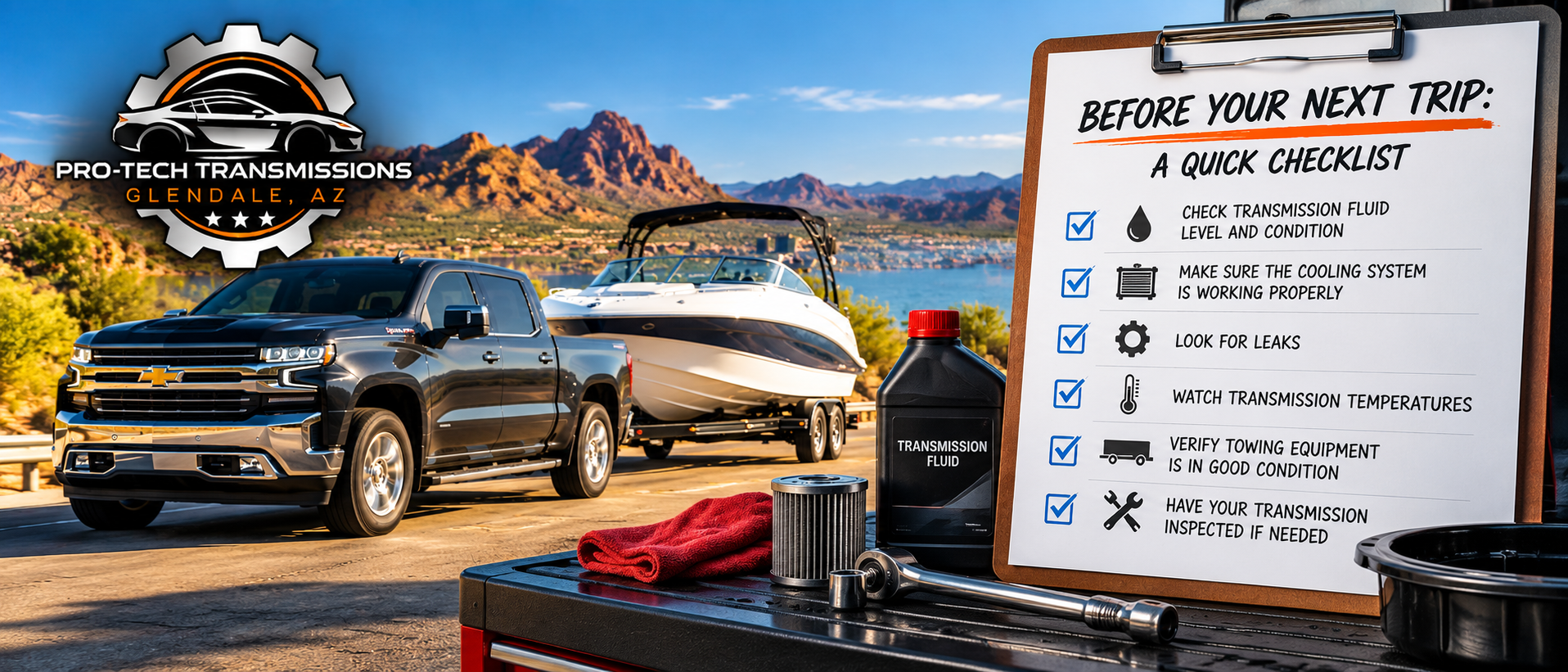
Before Your Next Trip: A Quick Checklist
- Confirm your trailer’s loaded weight is within your vehicle’s tow and GCWR ratings
- Make sure tow/haul mode and any transmission cooler are working
- Check for leaks, and have any slipping or rough shifting looked at first
- Inspect trailer brakes, lights, tires, and hitch connections
- Plan your departure time and route around heat and long grades
If your transmission has been slipping or shifting oddly, or you are not sure it is ready for a heavy tow, a free diagnostic can tell you before you are stuck on the side of the road.
Transmission Help for Towing Drivers in Glendale, AZ
Pro-Tech Transmissions is a family-owned shop at 5408 W Camelback Rd #2 in Glendale, serving drivers across the West Valley including Glendale, Peoria, Surprise, Waddell, Avondale, Goodyear, Litchfield Park, Tolleson, Tonopah, Sun City, and Sun City West. We diagnose and repair automatic and manual transmissions, differentials, and transfer cases, and we back automatic transmission repairs and rebuilds with a 3-year/36,000-mile warranty.
- Free external computer diagnostic before any repair
- 3-year/36,000-mile warranty on automatic transmission repairs and rebuilds
- Free towing (up to a $100 value) with major repair
- Financing available upon approval
Based in the East Valley? Our Phoenix shop at 2226 W Bell Rd, Phoenix, AZ 85023, (602) 978-9201, serves Phoenix, Scottsdale, Paradise Valley, Tempe, Chandler, Mesa, Gilbert, and Fountain Hills.
Frequently Asked Questions About Towing and Your Transmission
Can towing a trailer or boat damage my transmission?
Yes. Towing adds load and heat, and heat is the leading cause of premature transmission wear. Pulling more than your vehicle is rated for, towing in high temperatures without a cooler, or driving long grades at a steady load can overheat the fluid and wear clutches and seals. Staying within your tow rating and slowing on climbs greatly reduces the risk.
How much can my vehicle safely tow?
Check your owner’s manual or the tow-rating label for the maximum trailer weight and the gross combined weight rating (GCWR) for your exact vehicle. Do not rely on the hitch rating alone, because the hitch is often rated higher than the vehicle. Weigh the loaded trailer, since boats, campers, and gear weigh more than the empty figure.
Do I need a transmission cooler to tow in Arizona?
Many factory tow packages include one. If your vehicle does not have a tow package and you tow often or with heavy loads, an auxiliary transmission cooler is commonly recommended, especially in Arizona summer heat. A transmission shop can tell you what is appropriate for your specific vehicle and how you use it.
Can I tow with a CVT transmission?
It depends on the vehicle. Some CVT-equipped vehicles are rated for light towing and others are not rated to tow at all. Always follow the manufacturer’s stated rating in your owner’s manual, and be especially conservative with heat, grades, and trailer weight if your vehicle has a CVT.
What are the signs I overheated my transmission while towing?
Common signs include a burning smell, slipping or high revs without acceleration, delayed or harsh shifts, shuddering, a transmission or temperature warning light, and red or brown fluid under the vehicle. If you notice any of these, stop driving when it is safe, let the vehicle cool, and have it checked before towing again.
Does Pro-Tech Transmissions repair transmissions damaged while towing?
Yes. Our Glendale shop diagnoses and repairs automatic and manual transmissions, differentials, and transfer cases. We start with a free external computer diagnostic so you know what is wrong before any repair. Automatic transmission repairs and rebuilds carry a 3-year/36,000-mile warranty, and financing is available upon approval.
Schedule a Free Diagnostic in Glendale
Call (623) 600-8661 or visit us at 5408 W Camelback Rd #2, Glendale, AZ 85301.
Hours: Monday to Friday 8am to 5pm, Saturday 8am to 12pm, closed Sunday.