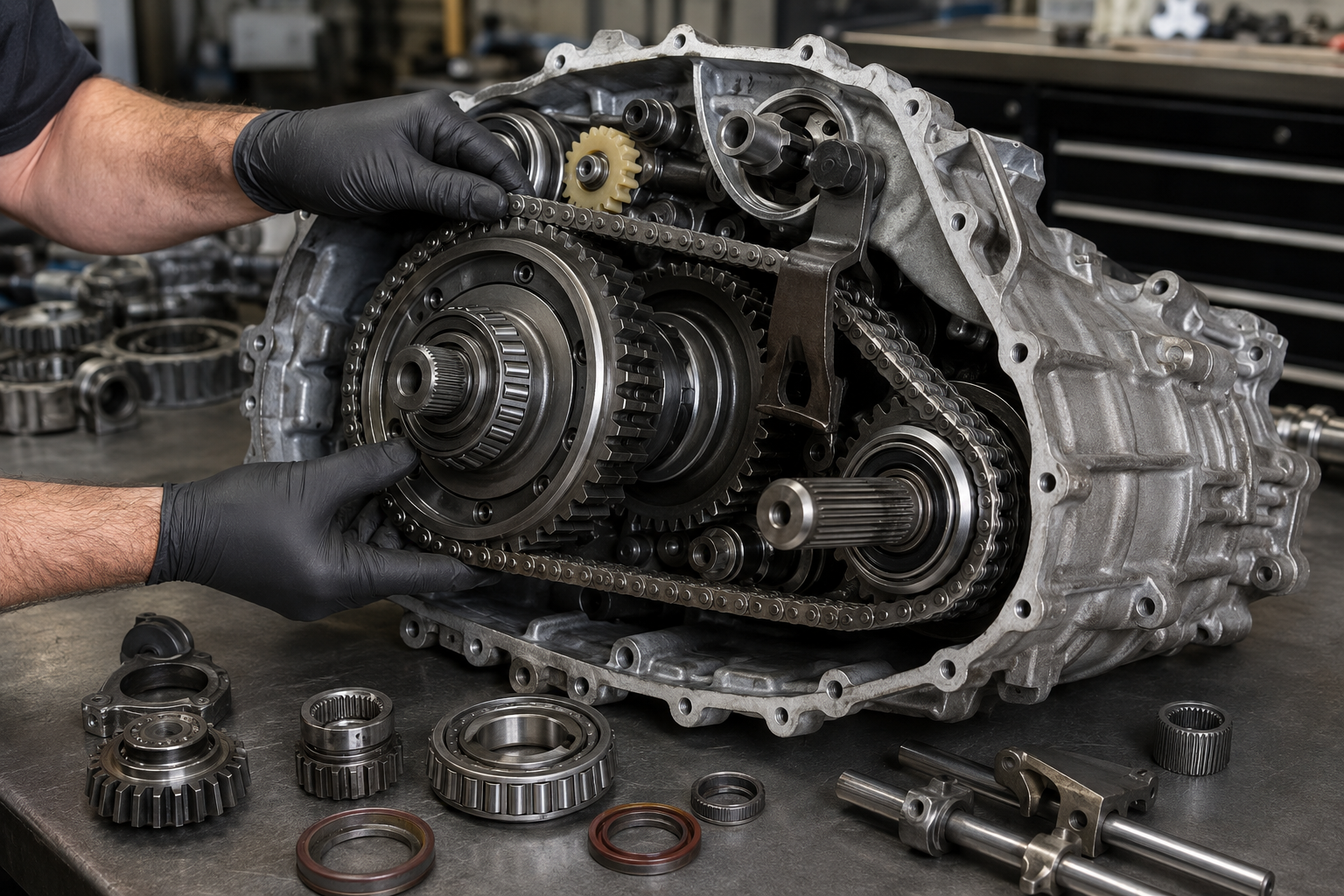
All-wheel-drive and four-wheel-drive vehicles provide added traction on wet roads, loose surfaces, mountain routes, and rough terrain. To deliver that power to multiple wheels, these vehicles rely on an important drivetrain component known as the transfer case.
When the transfer case develops a problem, you may notice grinding noises, fluid leaks, difficulty shifting into four-wheel drive, warning lights, or unusual handling. Some symptoms begin gradually. Others can leave the vehicle unable to deliver power correctly.
At Pro-Tech Transmissions of Glendale, we diagnose and repair transfer case problems for drivers throughout Glendale, Peoria, Avondale, Goodyear, Surprise, Tolleson, Litchfield Park, and the surrounding West Valley.
What Are the Warning Signs of a Bad Transfer Case?
The most common warning signs of a transfer case problem include:
- Grinding, humming, or clunking noises
- Difficulty shifting into or out of four-wheel drive
- A four-wheel-drive or AWD warning light
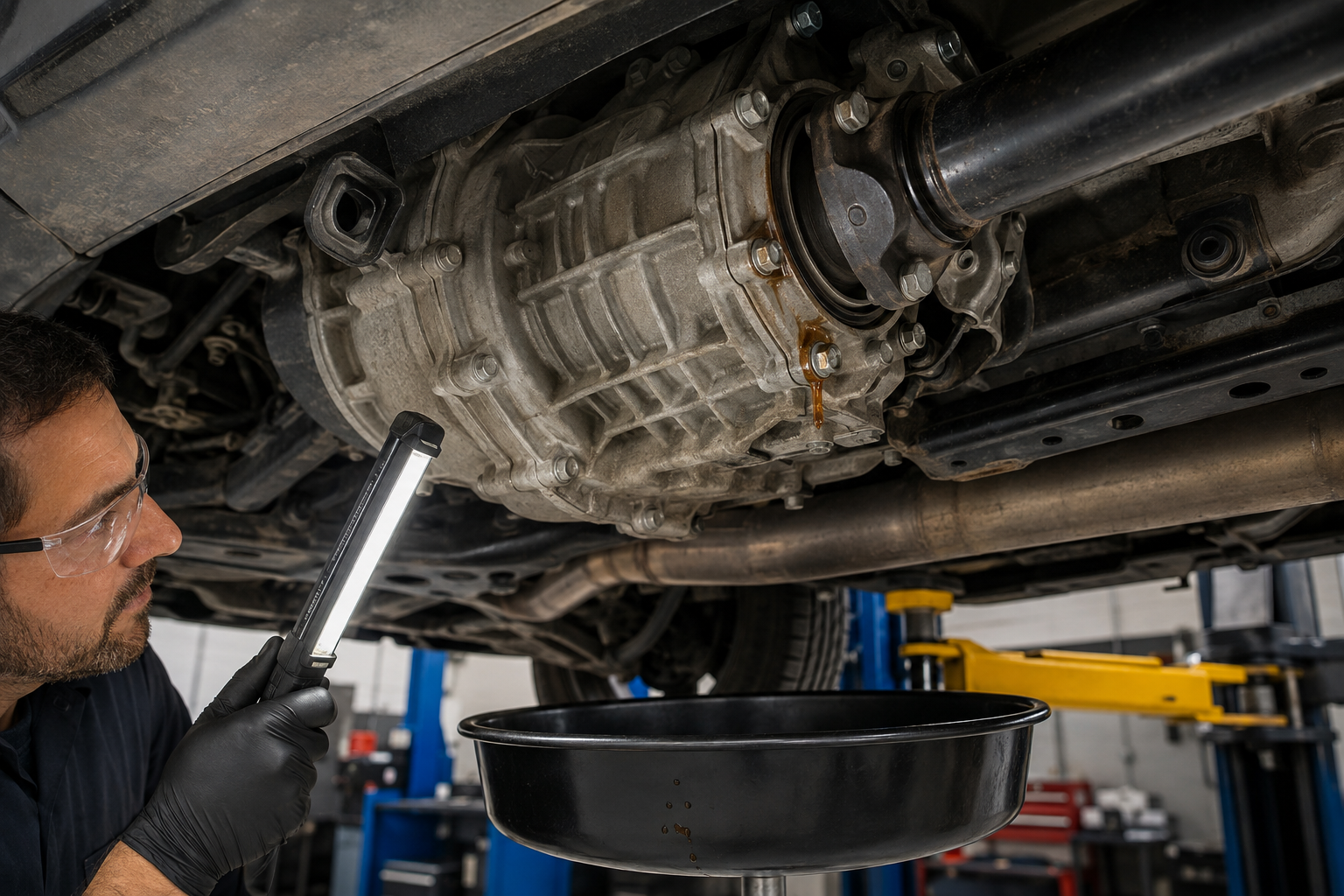
- Fluid leaking beneath the middle of the vehicle
- The vehicle unexpectedly slipping out of four-wheel drive
- Shuddering or binding while turning
- Uneven or unpredictable power delivery
- Problems accelerating
- New vibrations at certain speeds
- A burning smell caused by low or overheated fluid
These symptoms do not always mean the entire transfer case needs to be replaced. The cause could be low fluid, a failed seal, a damaged actuator, worn bearings, a stretched chain, an electrical fault, or an internal mechanical problem.
A proper diagnostic inspection is needed to determine what failed and whether the transfer case can be serviced, repaired, rebuilt, or replaced.
What Does a Transfer Case Do?
A transfer case is part of the drivetrain in many AWD and 4WD vehicles. It receives power from the transmission and directs it toward the front and rear axles.
Depending on the vehicle, the transfer case may use gears, a chain, clutches, an electronic control module, or a combination of these components to distribute engine power.
In a traditional four-wheel-drive system, the driver may select operating modes such as:
- Two-wheel drive high
- Four-wheel drive high
- Four-wheel drive low
- Automatic four-wheel drive
- Neutral
Many all-wheel-drive systems operate automatically. Sensors and electronic controls monitor traction and adjust power distribution without requiring the driver to select a mode.
The exact design varies between manufacturers. That is why a transfer case diagnosis should be based on the vehicle’s specific system rather than symptoms alone.
AWD vs. 4WD: What Is the Difference?
Although AWD and 4WD are often used interchangeably, they are not exactly the same.
All-Wheel Drive
All-wheel drive is commonly found in crossovers, cars, and some SUVs. Most AWD systems operate automatically and continuously adjust how much power reaches each axle.
AWD is designed to improve everyday traction on wet pavement, loose surfaces, and changing road conditions. It generally does not require the driver to engage the system manually.
Four-Wheel Drive
Four-wheel drive is commonly found in trucks and SUVs. Many 4WD systems allow the driver to select different modes based on road or terrain conditions.
Four-wheel-drive low provides additional torque at lower speeds and is typically intended for difficult terrain, steep grades, deep sand, mud, or similar conditions. Depending on the vehicle’s design, using a locked four-wheel-drive mode on dry pavement can place unnecessary stress on the drivetrain.
Both AWD and 4WD vehicles may use a transfer case, but their controls, internal components, fluid requirements, and repair procedures can differ significantly.
Nine Common Signs of Transfer Case Trouble
1. Grinding, Humming, or Clunking Noises
Unusual drivetrain noise is one of the most recognizable transfer case warning signs.
You may hear:
- Grinding while accelerating
- Humming that changes with vehicle speed
- Clunking when shifting between Drive and Reverse
- Clicking during turns
- Rattling beneath the vehicle
- Whining at highway speeds
These sounds can be caused by worn bearings, internal gear damage, chain wear, low fluid, or excessive play within the drivetrain.
Noise can also travel through the vehicle, making it difficult to determine whether it comes from the transmission, differential, driveshaft, axle, wheel bearing, or transfer case. Professional testing helps isolate the source.
2. Difficulty Shifting Into Four-Wheel Drive
If your vehicle will not shift into or out of four-wheel drive, the transfer case system may have a mechanical or electronic problem.
Possible causes include:
- A failed shift motor
- A malfunctioning actuator
- Damaged wiring or connectors
- A faulty switch
- A control-module problem
- Low or contaminated transfer case fluid
- Internal gear or fork damage
Some systems require specific conditions before changing modes. The vehicle may need to be stopped, placed in Neutral, or moving below a certain speed. Check the owner’s manual before assuming the system has failed.
If you follow the correct procedure and the vehicle still refuses to change modes, schedule a diagnostic inspection.
3. A Four-Wheel-Drive or AWD Warning Light
A warning light may appear when the vehicle detects a problem with the AWD or four-wheel-drive system.
The light may remain illuminated, flash repeatedly, or appear with a check-engine or stability-control warning.
A warning light could indicate:
- An actuator problem
- Incorrect sensor information
- An overheating AWD system
- A communication fault
- A clutch or coupling issue
- An internal transfer case problem
A diagnostic scan can retrieve trouble codes and provide a starting point, but codes must be tested and interpreted correctly. A code does not always mean the component named in its description should automatically be replaced.
4. Transfer Case Fluid Leaks
Transfer cases require fluid to lubricate and cool their internal components. If the fluid level drops, friction and heat can quickly damage bearings, gears, chains, and other parts.
A leak may originate from:
- Output-shaft seals
- Input-shaft seals
- Case gaskets
- Drain or fill plugs
- A damaged housing
- A venting problem
- Seals around shift components
Transfer case fluid may appear red, amber, brown, or darker depending on the fluid specification and its condition.
Because the transmission and transfer case are located close together, it is easy to mistake one leak for another. A technician can clean and inspect the area to identify the actual source.
5. Shuddering, Binding, or Hopping During Turns
A vehicle that shudders, hops, or feels resistant during tight turns may have a problem distributing power between the front and rear axles.
This symptom may be caused by:
- Internal clutch problems
- Incorrect transfer case fluid
- A malfunctioning coupling
- Drivetrain windup
- Mismatched tires
- Uneven tire pressure
- An improperly engaged four-wheel-drive mode
AWD systems can be particularly sensitive to differences in tire circumference. Installing one tire with a significantly different tread depth, size, or inflation level can cause the system to interpret normal wheel-speed differences as lost traction.
Over time, that mismatch may place additional stress on the transfer case or AWD coupling.
6. The Vehicle Slips Out of Four-Wheel Drive
A four-wheel-drive system should remain in the selected mode until the driver changes it or the vehicle’s automatic controls make an appropriate adjustment.
If the system repeatedly disengages, the problem may involve:
- Worn internal components
- Shift-fork damage
- A faulty actuator
- Damaged linkage
- Sensor or electrical problems
- Low fluid
- Control-system faults
Unexpected disengagement can affect traction when you need it most. The vehicle should be inspected before being driven in conditions that require four-wheel drive.
7. Vibrations That Increase With Speed
Transfer case and drivetrain problems can create vibrations that become more noticeable as vehicle speed increases.
Possible causes include worn bearings, internal imbalance, driveshaft problems, damaged universal joints, output-shaft wear, or incorrect operating angles.
Vibration can have many sources, including wheels, tires, suspension components, axles, and engine mounts. Avoid replacing parts based on guesswork. A technician should inspect the complete drivetrain and determine where the vibration begins.
8. Delayed or Uneven Power Delivery
A failing transfer case may struggle to send power smoothly to the front and rear wheels.
The vehicle may:
- Hesitate during acceleration
- Feel as though power is cutting in and out
- Struggle to gain traction
- Surge unexpectedly
- Feel different while turning
- Produce inconsistent AWD engagement
These symptoms can overlap with transmission, engine, differential, or electronic control problems. Diagnostic testing is necessary to separate transfer case trouble from other potential causes.
9. A Burning Smell
A burning odor can develop when transfer case fluid is low, contaminated, or overheated. It may also result from internal friction or fluid leaking onto a hot exhaust component.
Arizona heat can make lubrication and cooling problems more severe. If you notice a burning smell, new drivetrain noise, or fluid beneath the vehicle, have it inspected promptly.
Why Glendale Driving Can Be Hard on AWD and 4WD Systems
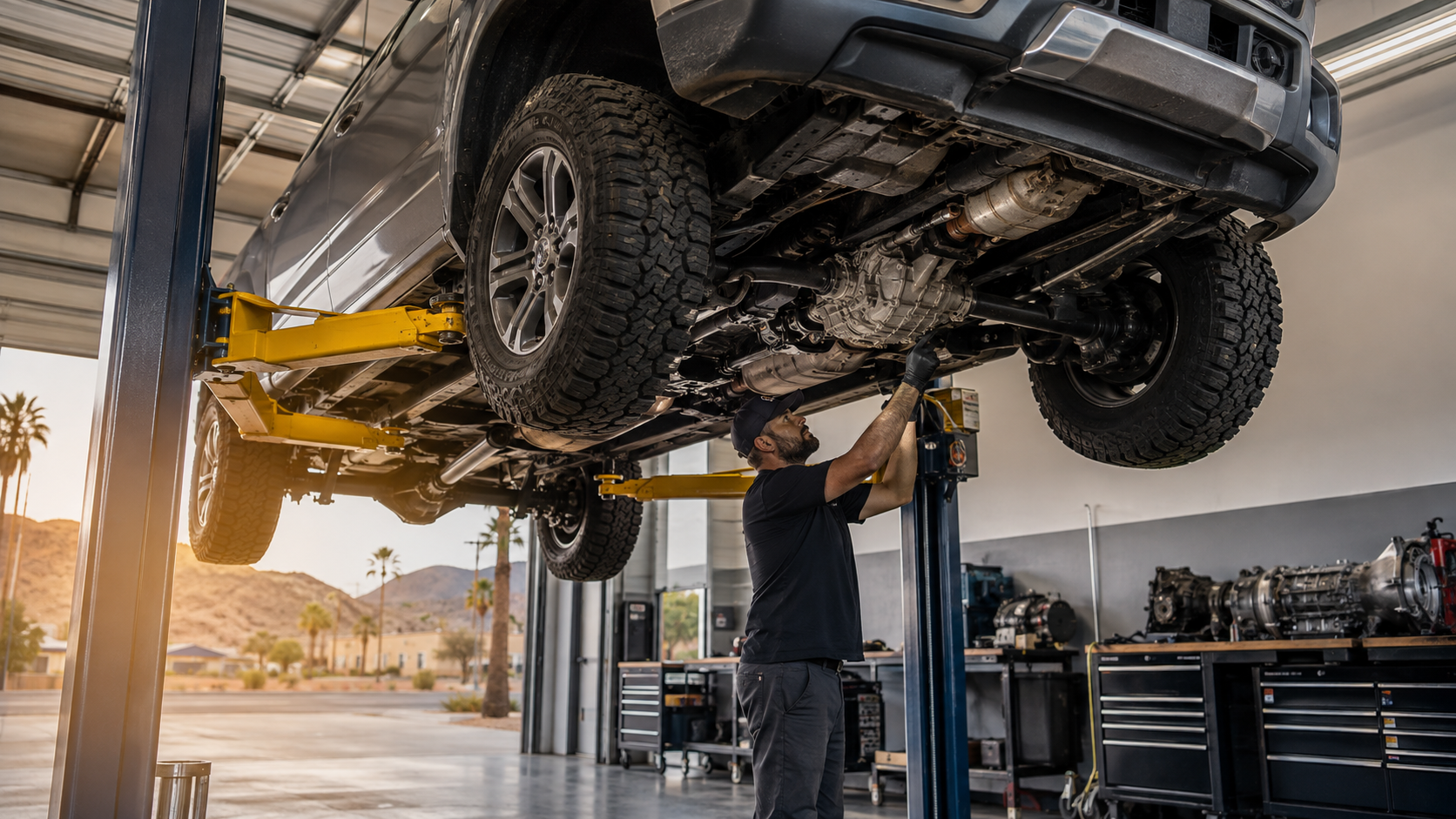
West Valley vehicles operate in demanding conditions. Glendale drivers regularly encounter extreme summer heat, congested roads, long freeway commutes, construction zones, dust, and trips involving heavy loads or trailers.
Daily driving along Camelback Road, Glendale Avenue, Grand Avenue, Northern Avenue, Loop 101, Loop 303, and I-10 can involve extended periods of high temperatures and stop-and-go traffic.
Many West Valley residents also use trucks and SUVs for:
- Towing work trailers
- Carrying tools and equipment
- Pulling boats or recreational vehicles
- Traveling to desert recreation areas
- Driving on gravel or unpaved roads
- Heading into Arizona’s mountain regions
- Transporting heavy loads
The transfer case does not necessarily work harder because the weather is hot, but extreme temperatures can worsen the effects of low, old, or incorrect fluid. Heat also places additional stress on seals and other drivetrain components.
Regular inspections are especially important when a vehicle is frequently used for towing, off-pavement travel, or commercial work.
What Causes a Transfer Case to Fail?
Transfer case problems can develop for several reasons.
Low or Contaminated Fluid
Fluid lubricates bearings, gears, chains, clutches, and other moving components. A leak or neglected service can allow friction and heat to damage the transfer case internally.
Using the Wrong Fluid
Transfer cases do not all use the same lubricant. Some require automatic transmission fluid, while others use a manufacturer-specific transfer case fluid.
Using the wrong product can affect lubrication, clutch operation, shifting, and long-term reliability.
Worn Bearings or Gears
Bearings and gears wear over time, particularly when the fluid level is low or the vehicle regularly carries heavy loads.
Chain Wear
Some transfer cases use an internal chain to transfer power. As the chain wears, it can stretch and create rattling, slipping, grinding, or internal contact with the case.
Failed Actuator or Shift Motor
Electronic four-wheel-drive systems often use an electric motor or actuator to change operating modes. A failed unit may prevent the vehicle from entering or leaving four-wheel drive.
Tire Mismatch
Different tire sizes, tread depths, or pressures can create continuous differences in wheel speed. On certain AWD systems, this can place unnecessary strain on transfer case clutches and other drivetrain components.
Improper Use of Four-Wheel Drive
Some part-time 4WD systems should not be used on dry pavement while locked in four-wheel drive. When the front and rear axles cannot rotate at the slightly different speeds required during a turn, stress can build throughout the drivetrain.
Always follow the operating instructions in your vehicle’s owner’s manual.
Towing and Heavy Loads
Towing does not automatically damage a transfer case. However, exceeding the vehicle’s limits, using an inappropriate drive mode, neglecting maintenance, or operating with low fluid can accelerate wear.
Can You Drive With a Bad Transfer Case?
You should avoid driving if the transfer case is grinding, leaking heavily, binding during turns, shifting unpredictably, or failing to deliver power correctly.
A minor leak or actuator problem can potentially become a major internal failure if ignored. Continuing to drive may also damage the transmission, driveshafts, differentials, axles, or tires.
If the vehicle produces severe grinding, loses power to the wheels, or behaves unpredictably, stop driving and arrange for professional assistance.
Pro-Tech Transmissions of Glendale offers free towing up to a $100 value with qualifying major repairs.
How Are Transfer Case Problems Diagnosed?
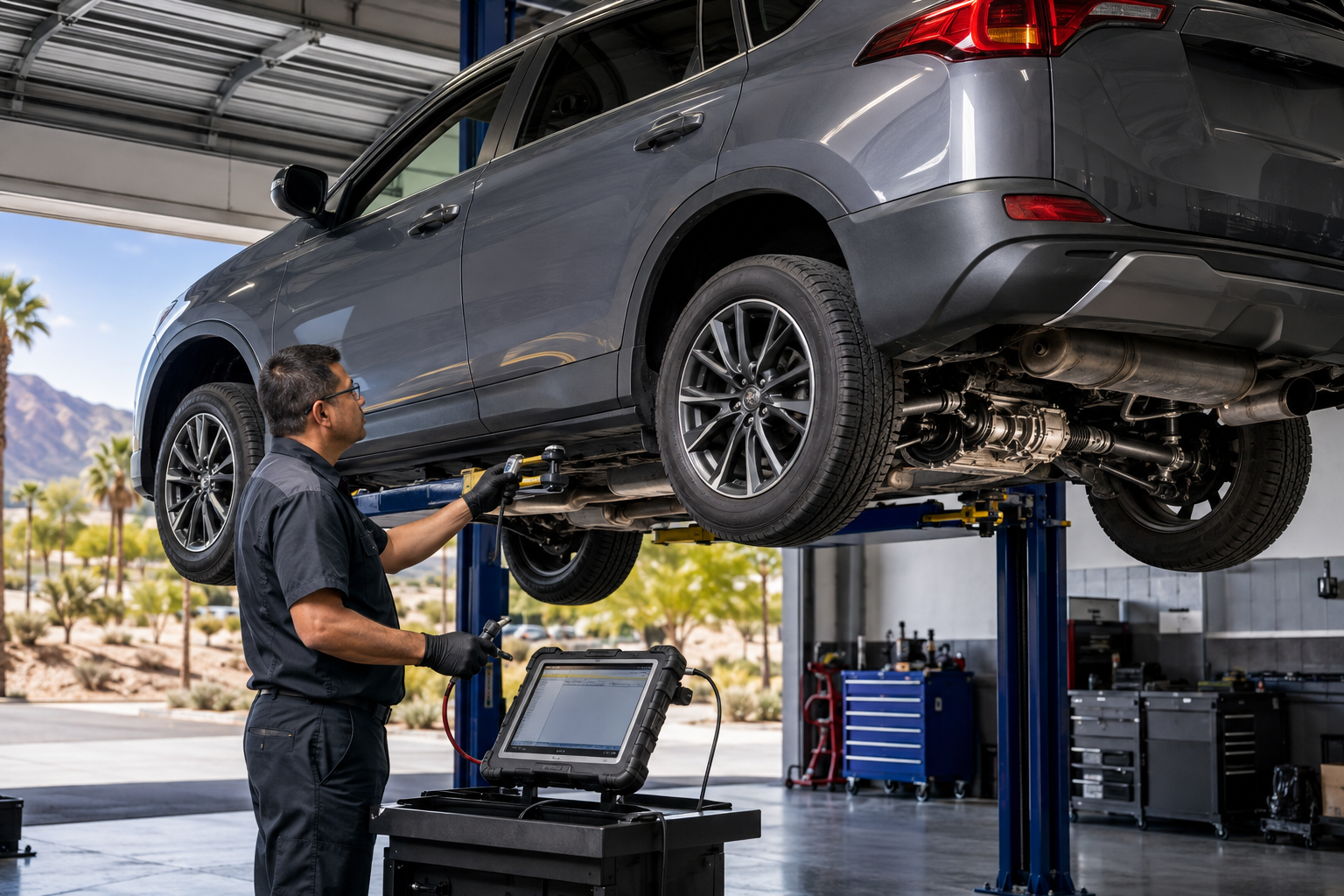
Transfer case diagnosis may include:
- Discussing when and how the symptoms occur
- Checking for AWD, 4WD, transmission, or engine trouble codes
- Inspecting the fluid level and condition
- Looking for leaks
- Testing the switches, wiring, sensors, and actuator
- Checking tire size, condition, and pressure
- Inspecting driveshafts and related drivetrain components
- Testing four-wheel-drive engagement
- Listening for internal bearing, chain, or gear noise
- Evaluating the transfer case during a controlled road test
A complete inspection helps prevent a differential, transmission, tire, or electrical problem from being mistaken for transfer case failure.
Does a Bad Transfer Case Need to Be Replaced?
Not always.
Depending on the diagnosis, the solution may involve:
- Correcting a fluid leak
- Replacing the proper fluid
- Repairing wiring or electrical connections
- Replacing a sensor
- Replacing a shift motor or actuator
- Repairing internal components
- Rebuilding the transfer case
- Installing a replacement transfer case
The right option depends on the transfer case design, severity of the damage, availability of parts, vehicle condition, and cost of each repair path.
The goal should be to correct the actual failure—not replace the entire unit without confirming what went wrong.
How Can You Help Protect Your Transfer Case?
You can reduce the likelihood of transfer case problems by following a few practical steps:
- Check the owner’s manual for the correct service interval
- Use the exact fluid specification required by the manufacturer
- Repair fluid leaks promptly
- Keep all four tires properly inflated
- Avoid mixing different tire sizes
- Pay attention to major differences in tread depth
- Follow the correct procedure when selecting 4WD modes
- Avoid locked 4WD modes on dry pavement unless the manufacturer permits it
- Have new noises, vibrations, or warning lights inspected early
- Service the drivetrain more frequently when regularly towing or driving off-road
Preventative maintenance cannot eliminate every mechanical failure, but it can help identify developing issues before they cause extensive internal damage.
Schedule Transfer Case Service in Glendale, Arizona
If your AWD or four-wheel-drive vehicle is making unusual noises, leaking fluid, displaying a warning light, or having trouble changing drive modes, bring it to Pro-Tech Transmissions of Glendale.
We diagnose, repair, rebuild, and replace transfer cases for trucks, SUVs, crossovers, and other AWD and 4WD vehicles. Our Glendale shop also provides transmission repair, differential service, diagnostics, and minor auto repair.
Pro-Tech Transmissions of Glendale
5408 W. Camelback Road, Suite 2
Glendale, AZ 85301
Phone: (623) 600-8661
Our location serves drivers throughout Glendale, Maryvale, Peoria, Avondale, Goodyear, Tolleson, Litchfield Park, Surprise, and surrounding West Valley communities.
Call (623) 600-8661 to schedule a diagnostic inspection before a warning sign becomes a major drivetrain problem.
Frequently Asked Questions About Transfer Case Problems
What are the first signs of a bad transfer case?
Early signs may include fluid leaks, humming or whining noises, difficulty selecting four-wheel drive, intermittent warning lights, or slight shuddering during turns. Because these symptoms overlap with other drivetrain problems, the transfer case should be tested before repairs are recommended.
Can low transfer case fluid cause grinding?
Yes. Low fluid can prevent bearings, gears, chains, and other internal components from receiving proper lubrication. This increases friction, heat, and wear. Grinding may indicate that internal damage has already begun, so the vehicle should be inspected promptly.
How often should transfer case fluid be changed?
The correct interval depends on the manufacturer, vehicle model, transfer case design, and operating conditions. Vehicles frequently used for towing, commercial work, or off-road driving may need more frequent service. Follow the owner’s manual and use the exact fluid specified for the vehicle.
Can mismatched tires damage an AWD transfer case?
They can on certain AWD systems. Differences in tire size, pressure, or tread depth create unequal wheel speeds. The AWD system may continuously compensate for that difference, potentially increasing wear on the transfer case, coupling, or differential. Tire requirements vary, so consult the vehicle manufacturer’s recommendations.
Is a transfer case the same as a transmission?
No. The transmission controls gear ratios and delivers engine power into the drivetrain. The transfer case receives that power and distributes it toward the front and rear axles in AWD and four-wheel-drive vehicles. The two components work together but perform different jobs.
Can a transfer case be repaired instead of replaced?
Yes, in many cases. Leaks, sensors, wiring, actuators, bearings, chains, and other components may be repairable. Replacement may be recommended when the housing or internal parts are severely damaged, repair parts are unavailable, or installing another unit provides a more dependable solution.