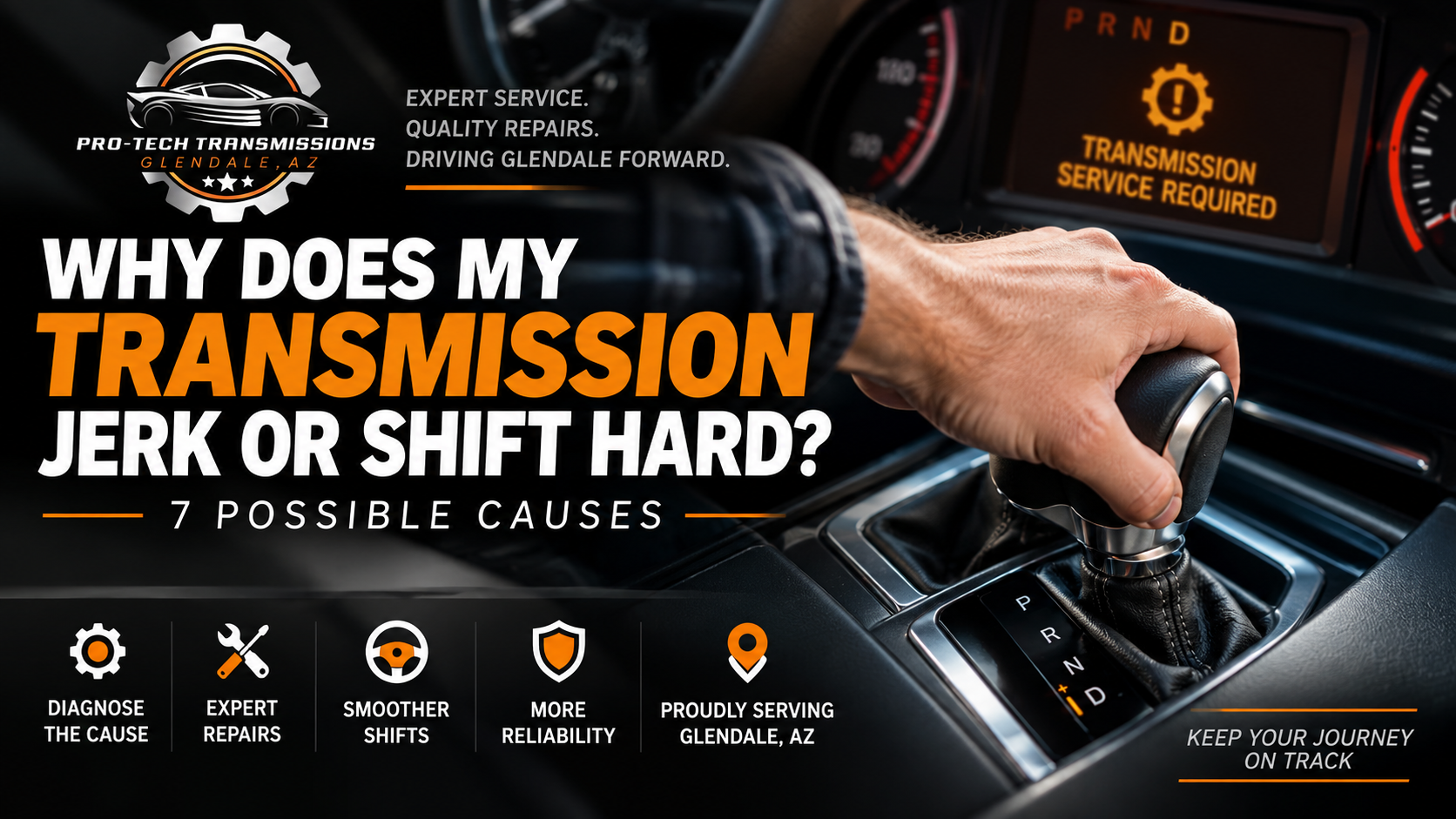
If your vehicle jerks, hesitates, or shifts hard when accelerating, it can be more than an uncomfortable ride. These symptoms may indicate that something within the transmission or another related vehicle system needs attention.
For drivers in Glendale, Arizona, transmission problems can be particularly concerning because high temperatures and demanding driving conditions can place additional stress on vehicle components. At Pro-Tech Transmissions Glendale, experienced technicians diagnose and repair transmission problems in domestic and European cars, trucks, and SUVs.
If your vehicle suddenly doesn’t feel right when changing gears, here are seven possible causes.
1. Low or Old Transmission Fluid
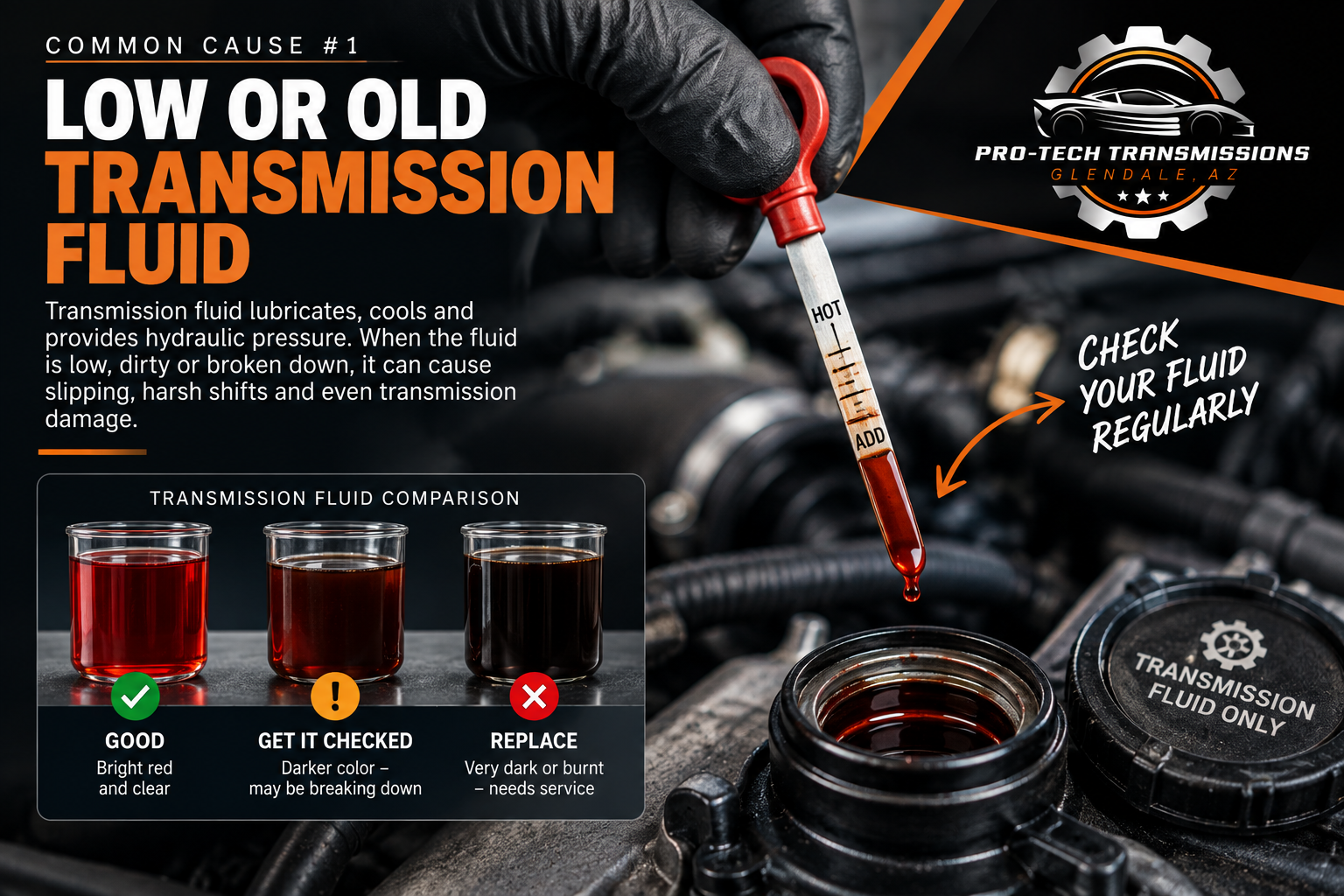
One of the first things to consider is the condition and level of the transmission fluid. Transmission fluid helps lubricate internal components, manage heat, and—in many automatic transmissions—provide the hydraulic pressure necessary for proper operation.
Low fluid caused by a leak or fluid that has deteriorated over time may contribute to hard shifting, delayed engagement, slipping, or jerking.
Signs of a potential transmission fluid problem can include:
- Fluid underneath the vehicle
- Delayed engagement when shifting into Drive or Reverse
- Rough or inconsistent shifting
- Unusual transmission noises
- A burning odor
Because transmission designs and fluid requirements vary by vehicle, drivers should follow the manufacturer’s recommendations rather than assuming every vehicle requires the same fluid service.
2. Worn Transmission Components
A transmission contains numerous components that must work together precisely. As a vehicle accumulates mileage, components such as clutch packs, bands, bearings, seals, or other internal parts can wear.
The result may feel like the vehicle slams into gear or jerks when the transmission shifts.
Internal wear doesn’t automatically mean the entire transmission needs to be replaced. A proper diagnosis can help determine whether the problem can be repaired or whether more extensive transmission work is necessary.
3. Transmission Solenoid Problems
Modern automatic transmissions rely on electronic controls, including shift solenoids, to regulate fluid flow and help determine when gear changes occur.
When a solenoid isn’t operating properly, drivers may experience unusual shifting behavior such as hard shifts, delayed shifts, skipped gears, or inconsistent shifting.
Because these symptoms can resemble other transmission problems, diagnostic testing is important before replacing components.
4. Torque Converter Problems
The torque converter transfers power from the engine to an automatic transmission. When something goes wrong with the torque converter or its lockup operation, a driver may notice shuddering, vibration, slipping, or jerking during acceleration.
In some situations, the sensation may feel like driving over a rough or rumble-strip surface even though the road itself is smooth.
A professional inspection can help determine whether the torque converter, transmission, fluid condition, or another component is causing the symptom.
5. Transmission Control or Sensor Issues
Today’s vehicles use computers and sensors to control many aspects of transmission operation.
Information about engine load, vehicle speed, throttle position, transmission speed, temperature, and other conditions can influence when and how the transmission shifts.
A malfunctioning sensor, wiring problem, control-module issue, or related electronic fault may cause unexpected shifting behavior.
This is one reason a hard-shifting transmission doesn’t necessarily mean the transmission itself has mechanically failed.
6. Engine Problems That Feel Like Transmission Problems
Here’s one drivers sometimes overlook: not every jerking sensation comes from the transmission.
Engine performance problems can sometimes create symptoms that feel remarkably similar to a transmission issue.
Problems involving ignition components, fuel delivery, air intake, engine controls, or other systems can cause a vehicle to hesitate, stumble, or jerk when the accelerator is pressed.
The distinction matters. Replacing transmission components won’t solve a drivability problem originating elsewhere in the vehicle.
Pro-Tech Transmissions can diagnose the vehicle to help identify what’s actually causing the symptom before recommending repairs.
7. Transmission Overheating
Heat is an enemy of transmission performance, which makes proper transmission operation especially important for vehicles driven throughout Glendale and the Phoenix metropolitan area.
Arizona’s high temperatures, combined with stop-and-go traffic, towing, heavy loads, or existing transmission problems, can contribute to elevated operating temperatures.
Excessive heat can accelerate fluid deterioration and potentially damage internal transmission components.
If a transmission temperature warning appears, the vehicle develops a burning smell, or shifting suddenly changes, having the vehicle inspected promptly can help prevent a developing issue from becoming more serious.

Why Does My Car Jerk When I Press the Gas?
A car that jerks when accelerating may have a transmission problem, but the transmission isn’t the only possible cause. Low transmission fluid, internal transmission wear, torque converter problems, faulty solenoids, electronic controls, or engine performance issues can all potentially create jerking or hesitation.
That’s why diagnosing the vehicle is more useful than trying to determine the problem from the symptom alone.
Can You Keep Driving If Your Transmission Is Shifting Hard?
It depends on what’s causing the hard shifting.
A minor electronic or fluid-related problem may behave very differently from an internal mechanical failure. Continuing to drive a vehicle with a significant transmission problem could potentially cause additional damage.
Drivers should pay particular attention if hard shifting is accompanied by transmission slipping, delayed engagement, fluid leaks, warning lights, burning odors, unusual noises, or difficulty getting the vehicle into gear.
Those are good reasons to schedule an inspection rather than waiting for the problem to get worse.
Transmission Repair in Glendale, AZ
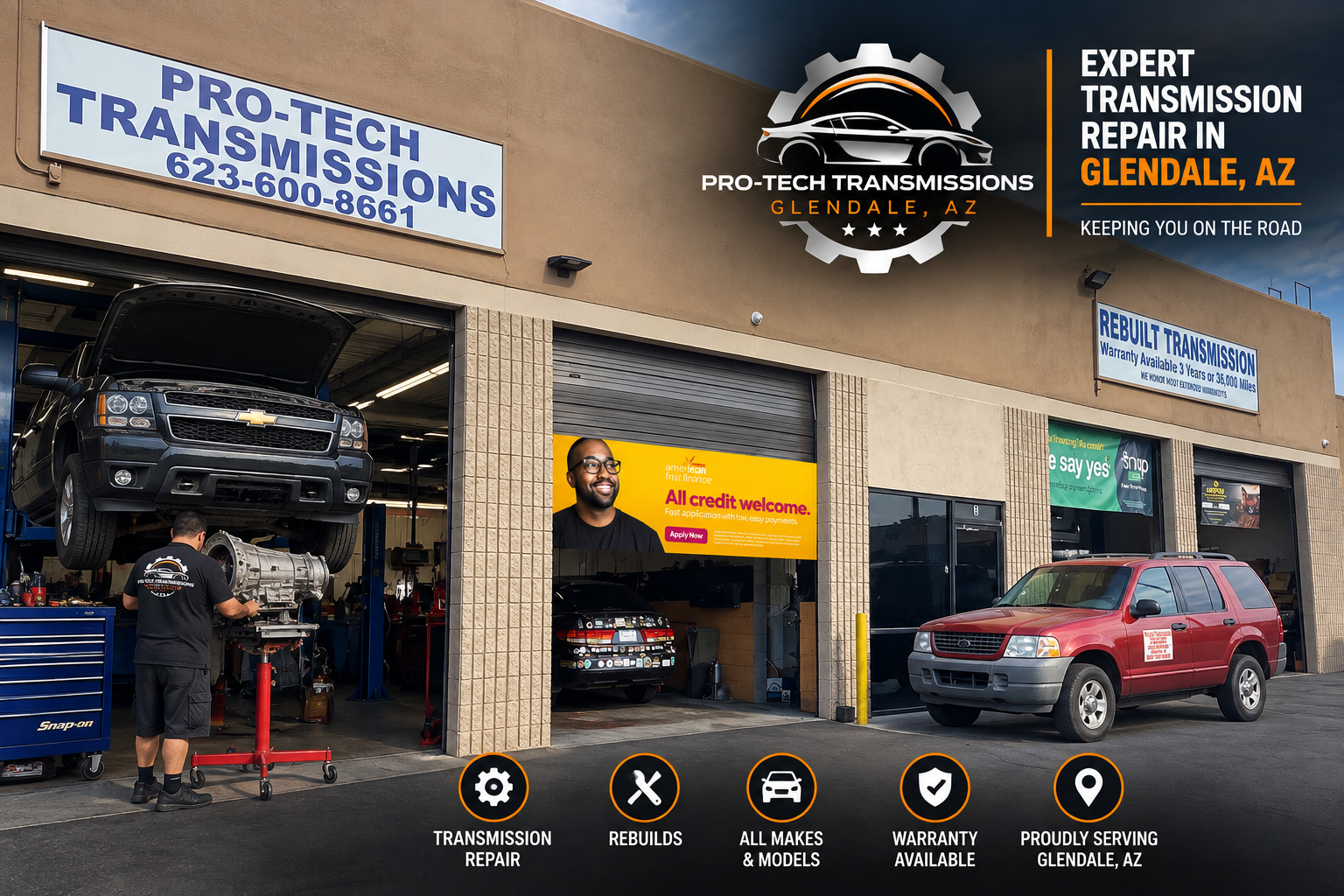
Pro-Tech Transmissions provides transmission diagnostics, transmission repair, transmission replacement, and transmission installation in Glendale, Arizona.
The Glendale team works on domestic and European makes and models, giving local drivers one place to turn whether they’re experiencing hard shifts, transmission slipping, delayed engagement, unusual noises, or other drivability problems.
The shop also provides minor auto repair services, allowing technicians to investigate related vehicle problems that may initially appear to be transmission trouble.
If a vehicle has started jerking or shifting differently, getting the problem diagnosed early can provide a clearer picture of what is happening—and what needs to be done about it.
Have Your Transmission Checked by Pro-Tech Transmissions Glendale
A transmission that suddenly begins jerking, slipping, hesitating, or shifting hard shouldn’t be ignored. The cause could be relatively straightforward, or it could be an early warning of a larger transmission problem.
Drivers in Glendale, Peoria, Sun City, Phoenix, and surrounding West Valley communities can contact Pro-Tech Transmissions Glendale to have their vehicle inspected and determine the cause.
Pro-Tech Transmissions Glendale
Phone: 623-600-8661
Schedule an inspection: Contact the Glendale shop today.